
NEWS
BREAKING NEWS: Chuck Schumer Sparks Firestorm After Claiming Opponents Don’t Want Poor People, People of Color, or Democrats to Vote 🚨🗳️

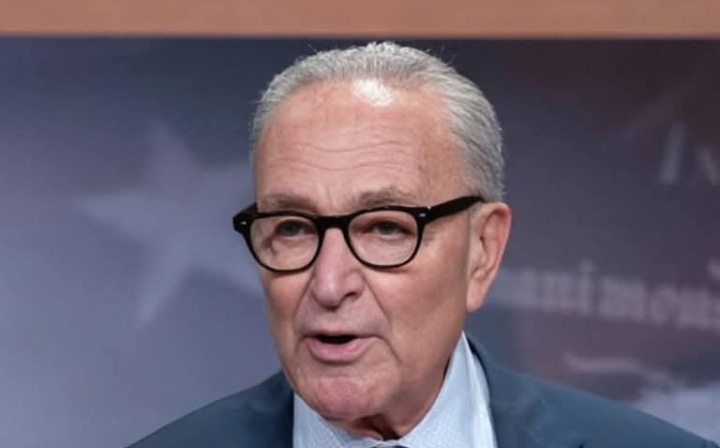
BREAKING NEWS: Chuck Schumer Accuses Political Opponents of Trying to Silence Poor and Minority Voters in Explosive Democracy Warning
In a fiery and emotional statement that quickly ignited debate across the United States, Senate Majority Leader Chuck Schumer accused political opponents of attempting to suppress the votes of millions of Americans—particularly poor communities, people of color, and Democratic voters. The remarks have intensified an already heated national conversation about voting rights and the future of democracy in the United States.
Speaking to reporters outside the Capitol in Washington, D.C., Schumer did not hold back. With cameras rolling and reporters pressing for answers, the New York senator delivered a dramatic warning about what he described as a growing threat to fair elections.
“They don’t want poor people to vote. They don’t want people of color to vote. They don’t want Democrats to vote,” Schumer said during the exchange. “And when you add that all up, it means they don’t believe in democracy the way this country was meant to work.”
His remarks came during an ongoing national dispute over voting laws being debated in several states and in Congress. Democrats have argued that new voting restrictions proposed or enacted in some states could make it harder for certain groups—particularly minorities and low-income voters—to participate in elections. Republicans, however, say the measures are designed to protect election integrity and restore public trust in the voting system.
The clash has become one of the most politically explosive issues in recent American politics.
Schumer’s comments immediately drew strong reactions from both sides of the political aisle. Supporters applauded his blunt warning, saying it highlighted concerns that many civil rights advocates have raised for years.
Several voting rights organizations echoed Schumer’s concerns, arguing that barriers such as stricter voter identification laws, reductions in early voting periods, and changes to mail-in ballot rules could disproportionately affect certain communities.
“These policies can make voting harder for people who already face obstacles,” one voting rights advocate said shortly after Schumer’s remarks spread across social media and television networks.
But critics pushed back just as forcefully.
Republican lawmakers and conservative commentators accused Schumer of exaggerating the issue and using inflammatory language to energize Democratic voters ahead of future elections. Some argued that election safeguards are necessary and that accusations of voter suppression are politically motivated.
The debate has once again placed the American voting system under intense scrutiny. Voting access has been a central political battle in the United States for decades, particularly following the landmark Voting Rights Act of 1965, which was designed to eliminate racial discrimination in voting.
In recent years, however, court rulings and new state laws have reshaped how elections are conducted, reopening arguments about where the line should be drawn between election security and voter accessibility.
Schumer warned that the stakes are extremely high.
“This is about the heart of our democracy,” he said. “If people start deciding which Americans get to vote and which Americans don’t, that is not the democracy our founders envisioned.”
The comments come as both major political parties prepare for upcoming election cycles that could reshape the balance of power in Washington. Analysts say the issue of voting rights will likely remain one of the most powerful campaign topics in the months and years ahead.
Political strategists from both parties acknowledge that the battle over voting laws is also a battle over public perception. Each side hopes to convince voters that their position protects democracy.
Meanwhile, ordinary Americans watching the debate appear sharply divided. Polls show that while many voters support measures to ensure election security, a significant portion also worries about potential barriers that could prevent eligible citizens from casting ballots.
The clash between these two concerns—security and access—has created one of the most complex political dilemmas in modern American politics.
For Schumer and his allies, the message is urgent: voting rights must be protected at all costs.
For his critics, the warning is seen as political rhetoric rather than a reflection of reality.
But one thing is clear: Schumer’s dramatic accusation has poured fuel onto an already blazing national debate about democracy, voting power, and who ultimately gets to shape the future of the United States.
And with elections always on the horizon, the fight over who gets to vote—and how easily they can do so—shows no signs of slowing down.

BREAKING NEWS: Chuck Schumer Sparks Firestorm After Claiming Opponents Don’t Want Poor People, People of Color, or Democrats to Vote 🚨🗳️

BREAKING NEWS:As Rumors Spread About FAMOUS TENNIS PLAYERS Serena Williams Spark worldwide social media about her private part pic being licked out on the court

BREAKING NEWS: SERENA WILLIAMS showing off her amazing body shape and fans can’t seem to resist her

BREAKING NEWS: Jill Biden Blasts Donald Trump for ‘Ruthlessly Destroying’ Joe Biden’s Hard-Earned Economic Legacy in Record Time ⚡🇺🇸

BREAKING NEWS: Donald Trump Shocks America With Bold Promise to Rebuild the United States as “One Nation Under God” ⚡🇺🇸

BREAKING NEWS: Fear Grips Iran as Government Warns Protesters — “We Will Treat You as the Enemy” 🚨🔥

BREAKING NEWS: Serena Williams Sparks Massive Online Buzz After Stunning Bikini Photo From Her Room Goes Viral 🔥📸

BREAKING NEWS: Horror in the Home — Amanda Wixon Jailed for 13 Years After Keeping Vulnerable Woman as a “House Slave” in Captivity for 25 Shocking Years 🚨

BREAKING NEWS: National Shock After Racist Cop Publicly Cuts Young Black Girl’s Hair in Broad Daylight — Unaware Her Father Is a Powerful Civil Rights Attorney Who Is Now Demanding Justice 🚨⚖️

BREAKING NEWS: 11 Nations Turn to Ukraine for Urgent Help as Iranian Killer Drones Spread Fear Across the Globe, Marking a New Chapter in the World’s Escalating Drone Warfare Crisis 🚨🌍✈️

BREAKING NEWS: Stunning Poll Shocker — In a dramatic twist, a majority of Americans now say Joe Biden outshines Donald Trump as president, shaking U.S. politics to its core ⚡🇺🇸🔥