
NEWS
BREAKING NEWS: Houthi Missile Strikes on Israel Intensify as Iran-Backed Group Threatens Wave of New Attacks in Escalating Middle East Conflict

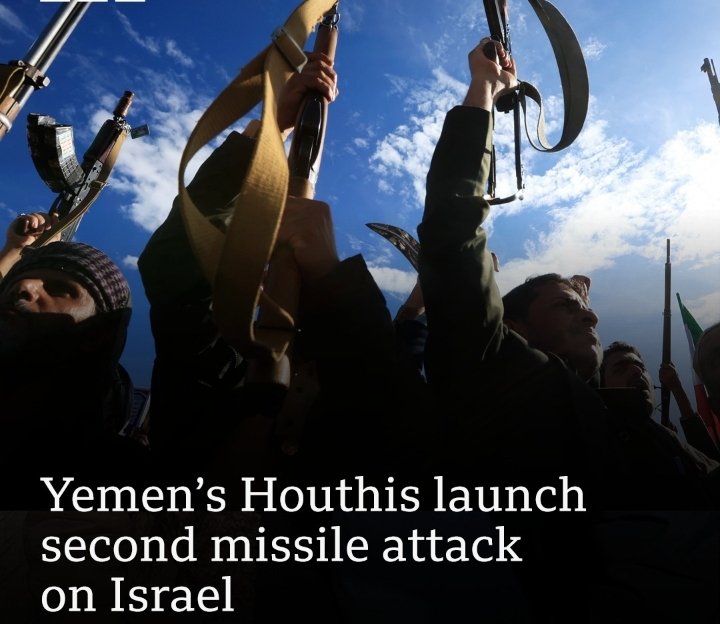
BREAKING NEWS: Houthi Missile Strikes Escalate as Iran-Backed Group Warns of More Attacks on Israel
Tensions across the Middle East have intensified dramatically after Yemen’s Houthi rebels launched fresh missile strikes toward Israel on Saturday, warning that more attacks are imminent in the coming days as the regional conflict deepens.
The Iran-backed group confirmed the latest barrage in an official statement, describing the operation as part of a broader campaign against Israel amid the ongoing war involving Iran and its regional allies. The strikes mark another escalation in what is rapidly becoming a multi-front conflict stretching across the Middle East.
According to reports, the missiles were aimed at what the Houthis described as “sensitive Israeli targets,” particularly in the southern part of the country. Air raid sirens were activated in several مناطق, sending civilians scrambling for shelter as Israel’s defense systems responded to the incoming threat. Israeli military officials later confirmed that at least one missile launched from Yemen had been intercepted before it could cause damage.
The Houthi movement, which controls large parts of Yemen including the العاصمة Sanaa, has increasingly aligned itself with Iran in the expanding confrontation with Israel. In recent statements, the group made it clear that Saturday’s attack is only the beginning of a sustained campaign.
“We will continue our operations in stages,” a Houthi spokesperson said, signaling that further strikes are already being planned. The group has tied its actions to what it calls ongoing “aggression” against Iran and its allies, vowing not to back down until its strategic objectives are achieved.
This latest development comes amid a broader escalation involving multiple إيران-aligned groups across the region. In recent days, coordinated attacks involving missiles and drones have been reported, with some operations allegedly carried out in conjunction with Iranian forces and allied groups such as Hezbollah.
Security analysts warn that the Houthis’ increasing involvement could significantly widen the scope of the conflict. What began as a confrontation centered around Iran and Israel now risks drawing in actors from Yemen, Lebanon, Iraq, and beyond, raising fears of a prolonged regional war.
The Houthis’ ability to strike Israel from such a long distance—over 1,500 kilometers—has also raised concerns among military experts. Their use of ballistic missiles and drones demonstrates a growing مستوى of sophistication, believed to be supported by Iranian التكنولوجيا and logistics.
Israel, for its part, has maintained a high مستوى of alert, with its air الدفاع systems continuing to intercept incoming threats. While most of the missiles launched from Yemen have been successfully neutralized, the psychological impact on civilians has been significant, with repeated sirens disrupting daily life in affected areas.
Beyond the immediate military implications, the attacks are also threatening global economic stability. The Red Sea and nearby maritime routes—critical corridors for international trade—have already been disrupted by earlier Houthi operations targeting commercial shipping. Analysts fear that an escalation could further endanger key chokepoints such as the Bab al-Mandeb Strait, a vital gateway for oil and goods النقل worldwide.
The broader conflict has already had severe humanitarian and economic consequences. Ongoing strikes across the region have resulted in casualties, infrastructure damage, and rising oil prices, while global markets remain on edge amid fears of further escalation.
Meanwhile, international calls for de-escalation have so far failed to produce tangible results. Diplomatic efforts appear stalled, with both sides showing little willingness to خطوة back from the brink.
As the situation continues to evolve, all eyes are now on the coming days, with the Houthis’ warning of additional attacks raising the possibility of even more intense confrontations. The risk of miscalculation or further escalation remains high, and the involvement of multiple regional actors suggests that the conflict could enter an even more dangerous phase.
For now, the Middle East stands on edge, with each new strike adding to the uncertainty and increasing the likelihood of a wider war that could have far-reaching global consequences.

BREAKING NEWS: Serena Williams Crowned Eternal Queen as Millions of Fans Worldwide Erupt in Powerful Tribute to Her Legendary Legacy

BREAKING NEWS: Gunfire Chaos Near Israeli Consulate Istanbul Leaves Two Gunmen Dead as Panic Erupts in Istanbul

BREAKING NEWS: Serena Williams Breaks the Internet as Stunning Instagram Photo Triggers Global Fan Frenzy and Leaves Millions Screaming in Shock and Admiration

BREAKING NEWS: Houthi Missile Strikes on Israel Intensify as Iran-Backed Group Threatens Wave of New Attacks in Escalating Middle East Conflict

BREAKING NEWS: Serena Williams Ignites Global Buzz with Iconic Swimsuit Look, Fans Celebrate Her Confidence, Power, and Timeless Influence Beyond Tennis

BREAKING NEWS: Serena Williams Stuns the Internet as Viral Beach Photos Ignite Global Frenzy, Leaving Fans Speechless and Social Media Overflowing With Reactions Worldwide

🚨 BREAKING NEWS: Taylor Swift and Travis Kelce Reunite in Shocking Romance Comeback That Sends Fans Into Global Frenzy Over Their Rekindled Love Story 💔➡️❤️

BREAKING NEWS: Serena Williams’ Beach Photos Spark Global Frenzy as Fans Flood Social Media in Awe of Her Stunning Confidence and Unstoppable Star Power

BREAKING NEWS: Serena Williams Leaves Fans Speechless Yet Again With Stunning Beach Presence, Effortless Style, and Unmatched Confidence That Continues to Inspire Millions Worldwide

BREAKING NEWS: Serena Williams Leaves Fans Speechless Worldwide With Jaw-Dropping Appearance That Sparks Massive Social Media Frenzy and Renewed Praise for Her Confidence, Power, and Timeless Influence

BREAKING NEWS: Serena Williams Sparks Frenzy as Fans Go Wild Over Her Stunning Body Transformation
