
NEWS
BREAKING NEWS: Iran hits back across the Gulf, targeting Arab states hosting U.S. bases, rattling cities, shutting airspace, sparking interceptions, global alarm, memes, and midnight sirens as a regional crisis explodes faster than diplomacy can blink on a tense Friday

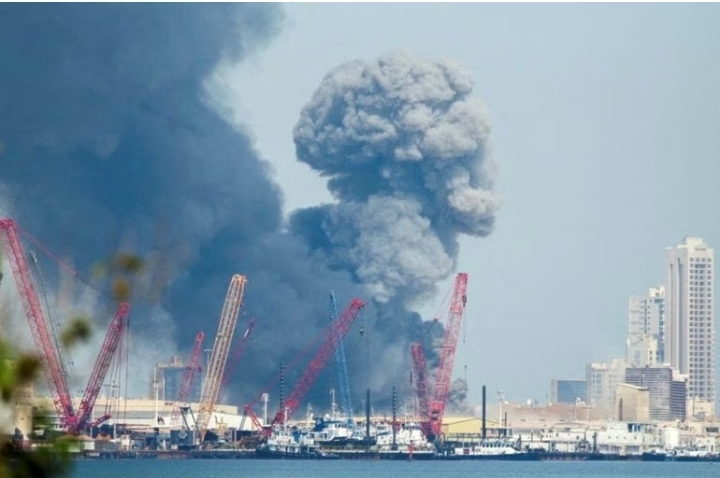
BREAKING NEWS — Middle East Crisis Deepens as Iran Strikes Multiple Arab States Hosting U.S. Military Assets
February 28, 2026 — In one of the most serious escalations of regional hostilities in years, Iran launched coordinated missile strikes today against several Gulf Arab states that host United States military bases and assets, expanding the conflict that erupted after joint U.S.–Israeli airstrikes on Iranian territory. The barrage has shaken cities across the Gulf, forced airspace closures, triggered regional condemnations, and raised urgent fears of a broader war engulfing the Middle East.
Iran’s powerful Islamic Revolutionary Guard Corps (IRGC) declared that all U.S. and Israeli military targets in the Middle East are now legitimate targets following the strikes on its soil, vowing that its retaliation “will continue relentlessly until the enemy is decisively defeated.”
Strikes on Gulf Arab States Hosting U.S. Forces
Today’s attacks hit multiple nations in rapid succession, signalling a dramatic widening of the conflict beyond Iran’s borders:
🇧🇭 Bahrain
Iranian missiles struck the area around the U.S. Navy’s Fifth Fleet headquarters outside Manama — a key strategic hub for American naval operations in the Persian Gulf. Bahraini authorities confirmed that incoming projectiles were detected and intercepted, though at least one explosion was observed.
🇶🇦 Qatar
Doha’s air defenses engaged several Iranian missiles aimed toward Al Udeid Air Base, home to the largest American air installation in the region and a principal headquarters for U.S. Central Command (CENTCOM). Qatari officials said all incoming threats were intercepted without damage.
🇰🇼 Kuwait
Kuwait’s military said it shot down missiles in its airspace, with the Ali Al Salem Air Base — a major U.S. Army facility — among the strategic sites under threat.
🇦🇪 United Arab Emirates
In Abu Dhabi, residents reported loud explosions as Emirati forces intercepted Iranian missiles. However, falling debris killed at least one person in a residential area, according to state media. Iran’s attacks prompted UAE authorities to denounce the “blatant violation” of their sovereignty.
In response to the strikes, Qatar, Kuwait, Bahrain, and the UAE temporarily closed their airspace, a rare move underscoring the severity of the situation.
Beyond the Gulf: Wider Regional Impact
Though the focus today was on the Gulf states hosting American military assets, reports indicate that Jordan, Israel, and Iraq also detected or intercepted Iranian projectiles. In Jordan, two ballistic missiles were shot down; in Israel, civil defense sirens wailed as defence systems engaged incoming fire; and in Iraq, airports reportedly came under aerial attack.
Airspace closures extended beyond the Gulf, affecting commercial flight routes across the region. Airlines suspended or rerouted flights, raising international concern about disruptions to global travel and commerce.
Background: U.S.–Israel Airstrikes and Iranian Retaliation
The dramatic escalation followed a large-scale joint attack by United States and Israeli forces on Iranian territory earlier Saturday. U.S. Central Command confirmed that precision strikes hit Iranian missile sites, air defense infrastructure, and command centers linked to the Islamic Revolutionary Guard Corps — an operation described by U.S. officials as a response to perceived imminent threats. Israeli officials said their operations focused on regime-related military targets.
Iran’s retaliation came within hours of those strikes, with the IRGC declaring its forces were responding “in defence of the nation” and that there were no longer any red lines regarding legitimate targets in the region.
Human Toll and Civilian Impact
While exact casualty figures remain unclear, at least one civilian death has been confirmed in Abu Dhabi. Most incoming missiles were intercepted by air defence systems, but falling debris still posed a lethal threat. In addition to lives lost, the trajectories of missiles across densely populated cities triggered widespread panic, forced residents into shelter, and disrupted normal life across capitals including Manama, Doha, Kuwait City, and Abu Dhabi.
Schools in several Gulf states temporarily shifted to remote learning as authorities sought to safeguard students.
Regional and International Reactions
Governments across the Gulf quickly condemned the Iranian strikes. Qatar labelled the attacks a “flagrant violation” of sovereignty; the UAE denounced them as “dangerous escalation”; and Bahrain described the strike against its territory as “treacherous.” Saudi Arabia also issued a strong rebuke, warning that such actions cannot be justified under any pretext.
Globally, reactions have been mixed. Russia condemned the U.S.–Israeli attacks on Iran as “unprovoked aggression,” while arguing for diplomacy and warning against further escalation. Venezuela also criticised both the initial strikes and Iran’s retaliatory attacks.
Outlook: Escalation or Diplomacy?
With airspace closures, cross-border military engagements, and international condemnations, the risk of a broader conflict involving multiple states remains high. Diplomatic efforts — including talks that had been underway between Iran and other nations — have been jeopardised by the outbreak of hostilities, making the prospects for an immediate ceasefire uncertain.
For now, the Gulf region braces for further developments as governments, militaries, and civilians alike grapple with an unfolding crisis that could reshape Middle Eastern geopolitics.

BREAKING NEWS: Viral reports claim an Israeli airstrike killed 40 Iranian elementary school students in Hormozgan, sparking global outrage, grief, and heated social media debates—though officials have yet to confirm the tragic incident, leaving facts still unverified.

BREAKING NEWS: Iran hits back across the Gulf, targeting Arab states hosting U.S. bases, rattling cities, shutting airspace, sparking interceptions, global alarm, memes, and midnight sirens as a regional crisis explodes faster than diplomacy can blink on a tense Friday

BREAKING NEWS: Smoke Over Al Wakrah as Iran Missiles Are Intercepted Near United States military Bases—Gulf Tensions Explode Into the Open

Am i beauty, they said am not :Serena Williams questions her own beauty

BREAKING NEWS: Travis Kelce Poised to Become the Next Voice of Thursday Night Football as Prime Video Eyes Star NFL Tight End for Big Broadcast Switch

BREAKING NEWS: Serena Williams Shocks the World With an Unseen On-Court Moment That Instantly Goes Viral, Leaving Fans and Celebrities Speechless

BREAKING NEWS: Serena Williams Leaves Fans Worldwide in Shock After a Jaw-Dropping On-Court Moment That No One Expected, Turning a High-Stakes Match Into a Viral Scene That Sparked Instant Reactions, Debates, and Global Conversation Across Sports and Social Media Platforms

BREAKING NEWS — **Donald Trump calls for regime change in Iran as the United States and Israel unleash massive, coordinated strikes, triggering global alarm, Middle East airspace shutdowns, and fears of a wider regional war with worldwide economic consequences.

BREAKING NEWS: Internet Erupts Over Stunning Beach Photo — Fans Left Gasping as Raw, Unfiltered Confidence Challenges Every Idea of Beauty, Strength, and Power, Sending Social Media Into a Frenzy Worldwide.

BREAKING NEWS: Jaw-Dropping Beach Photo Stuns the Internet — Raw, Unfiltered Confidence Takes Over Social Media, Leaving Fans Shocked as Beauty Standards Are Boldly Challenged With Zero Apologies.

BREAKING NEWS: Taylor Swift and Travis Kelce Set the Internet on Fire as Wedding Bells Rumored for June 13, 2026, Fueling Global Frenzy, Fan Theories, and Buzz Over a Fairytale Celebrity Celebration
