
NEWS
BREAKING NEWS: Shockwaves Across the World as the United States Launches Powerful Missile Strike on Iran, Triggering Fears of All-Out War, Global Instability, and a Dangerous New Chapter in Middle East History

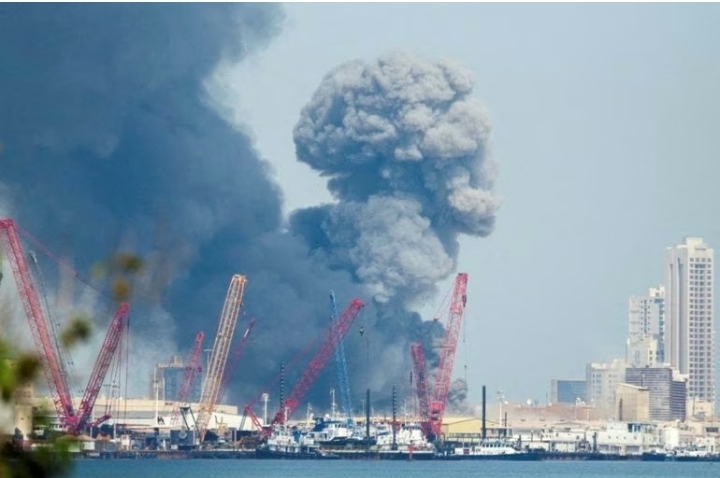
BREAKING NEWS: The United States has launched a major military strike involving missiles against Iran, igniting one of the most serious escalations in U.S.–Iran tensions in decades.
In the early hours of Saturday, February 28, 2026, the U.S. military, in close coordination with Israeli forces, unleashed a powerful offensive on strategic sites across the Islamic Republic of Iran. The operation — described by American officials as a preemptive move to neutralize what they deem an imminent threat — included the launch of Tomahawk cruise missiles, precision-guided air-launched munitions from fighter jets, and, for the first time in combat operations, the deployment of suicide attack drones modeled after Iranian designs.
What Happened
At approximately 1:15 a.m. Eastern Time, naval vessels and military aircraft associated with the U.S. Central Command (CENTCOM) struck multiple Iranian military and infrastructure targets, according to Pentagon releases. These included Iranian command and control facilities, radar and air defense systems, missile and drone launch sites, and military airfields. U.S. military spokespeople said the goal was to “eliminate imminent threats posed by the Iranian regime,” though specific details on the exact nature of these threats have not been fully disclosed.
The strikes were part of what U.S. leadership is calling Operation Epic Fury, a broad campaign that American and Israeli officials assert targets Iran’s capability to produce nuclear weapons and long-range missiles. High-precision Tomahawk missiles, capable of striking deep into Iranian territory from more than a thousand miles away, were among the main weapons used.
Iranian Leadership Targeted
Iran state media later confirmed that the country’s Supreme Leader, Ayatollah Ali Khamenei, was killed in the attacks, alongside other senior military figures, including commanders of the Islamic Revolutionary Guard Corps (IRGC). Satellite imagery obtained by independent sources showed significant damage around Khamenei’s compound and other high-value targets.
The death of Iran’s supreme leader represents a seismic shift in the nation’s political landscape, thrusting Iran into uncharted leadership turmoil amid one of the largest military confrontations in its recent history. Initial reports suggest interim figures within Tehran’s government are attempting to maintain continuity and avoid a complete collapse of state structures.
Regional Retaliation
Almost immediately after the U.S.–Israeli offensive, Iran launched missile and drone attacks against U.S. and allied military facilities across the Middle East, including bases in Bahrain, Qatar, Kuwait, the United Arab Emirates, and Israel. Allied air defenses reportedly intercepted many incoming projectiles, and there have been no confirmed U.S casualties so far.
Britain’s defence officials also reported that Iran fired missiles toward UK military bases in Cyprus, underscoring how the instability is spilling beyond the immediate U.S.–Iran dynamic.
International Response
The military escalation has drawn swift and mixed international reactions. At an emergency United Nations Security Council meeting, U.N. Secretary-General António Guterres condemned both sides’ actions, warning that the conflict risks broader regional war and severe humanitarian consequences if left unchecked. Guterres also stressed the need for a return to diplomatic channels.
Major world powers have diverged in their responses:
Countries like Russia and China have called for an immediate halt to military operations and urged diplomatic engagement.
The Arab League and several Middle Eastern states have expressed profound concern about civilian safety and regional stability.
European nations such as France, Germany, and the United Kingdom have taken a cautious stance — condemning retaliatory strikes by Iran while not overtly endorsing the U.S.–Israeli offensive — and strongly advocating for peaceful resolution and protection of civilians.
Civilian Impact and Global Ramifications
The conflict has already produced significant civilian harm within Iran, with reports of dozens killed and many more injured, including non-combatants in affected cities. Communications disruptions and infrastructure damage have further compounded the humanitarian situation.
Energy markets and global geopolitics have reacted sharply, with oil prices surging and financial markets jittery at the prospect of prolonged conflict in the Middle East. There are growing fears that the crisis could spill over into neighbouring regions if diplomatic efforts do not quickly gain traction.
What Comes Next
Leaders around the world are calling for de-escalation, yet, with Iran’s leadership decapitated and both sides entrenched in military operations, the conflict’s trajectory remains uncertain. U.S. and Israeli officials say they are prepared for “a sustained campaign” if necessary, while Iranian authorities vow retaliation against perceived aggression.
As of now, the situation remains fluid and dangerous, with worldwide attention focused on diplomatic negotiations that might help prevent a wider conflagration.

BREAKING NEWS: Internet Erupts as Fans Make Jaw-Dropping Claims About Serena Williams’ Daughter — The Viral Debate No One Saw Coming

BREAKING NEWS: Donald Trump Orders U.S. Military Strike on Iran, Sparking Global Shock, Middle East Tensions, and Fears of a Rapidly Expanding Regional War

BREAKING NEWS: Serena Williams Shuts Down life outside the court the

BREAKING NEWS :Serena Williams Trades Center Court for Sandy Shores, Revealing How Her Deep Love for the Beach Became a Symbol of Freedom, Family Joy, and Peace Beyond Tennis

BREAKING NEWS: Shockwaves Across the World as the United States Launches Powerful Missile Strike on Iran, Triggering Fears of All-Out War, Global Instability, and a Dangerous New Chapter in Middle East History

BREAKING NEWS: fans can’t seem to resist Serena Williams beauty with her amazing body shape but …..

BREAKING NEWS: Viral reports claim an Israeli airstrike killed 40 Iranian elementary school students in Hormozgan, sparking global outrage, grief, and heated social media debates—though officials have yet to confirm the tragic incident, leaving facts still unverified.

BREAKING NEWS: Iran hits back across the Gulf, targeting Arab states hosting U.S. bases, rattling cities, shutting airspace, sparking interceptions, global alarm, memes, and midnight sirens as a regional crisis explodes faster than diplomacy can blink on a tense Friday

BREAKING NEWS: Smoke Over Al Wakrah as Iran Missiles Are Intercepted Near United States military Bases—Gulf Tensions Explode Into the Open

Am i beauty, they said am not :Serena Williams questions her own beauty

BREAKING NEWS: Travis Kelce Poised to Become the Next Voice of Thursday Night Football as Prime Video Eyes Star NFL Tight End for Big Broadcast Switch
