
NEWS
BREAKING NEWS: Smoke Over Al Wakrah as Iran Missiles Are Intercepted Near United States military Bases—Gulf Tensions Explode Into the Open

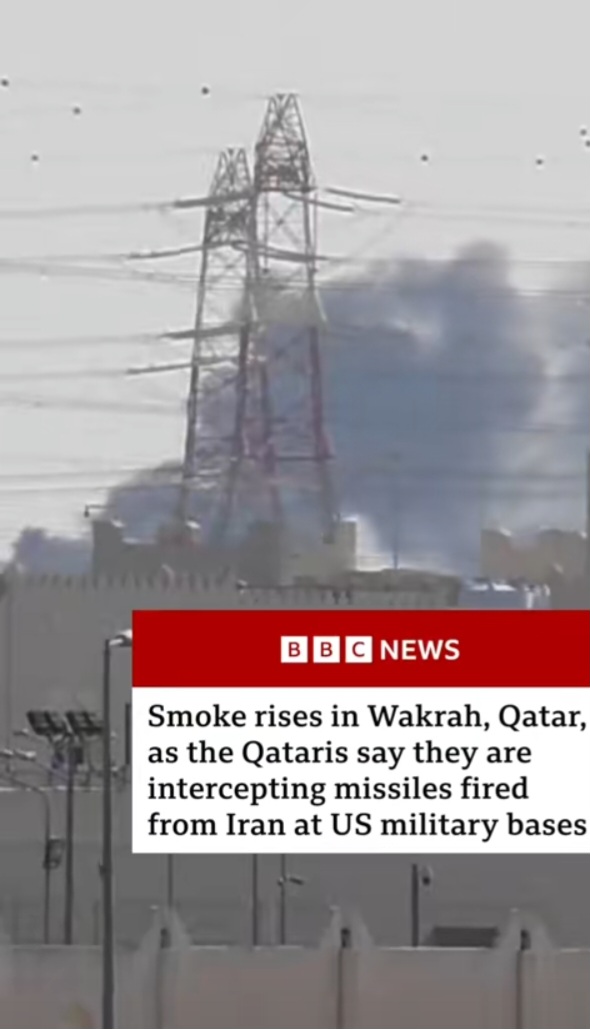
BREAKING NEWS: Smoke Rises Over Wakrah as Qatar Says It Intercepted Missiles Fired From Iran Toward US Military Bases
Thick plumes of smoke were seen rising over Al Wakrah on Tuesday, sparking widespread alarm after Qatar confirmed that its air-defense systems were actively intercepting missiles launched from Iran and directed toward United States military installations in the region.
The dramatic images, first circulated on social media and later broadcast by BBC News, showed smoke drifting across an area dotted with power lines and industrial structures, intensifying fears that the Gulf region may be edging closer to direct confrontation. While Qatari authorities moved quickly to reassure the public that there were no immediate reports of civilian casualties or major damage, the sight of smoke near a populated area sent shockwaves across the country.
In an official statement, Qatari defense officials said the missile interceptions were carried out as part of standard defensive procedures designed to protect national airspace and critical infrastructure. The government emphasized that its air-defense systems remain fully operational and that coordination with regional and international partners is ongoing. Residents were urged to remain calm and rely on official channels for accurate information.
The alleged missile launches from Iran mark a sharp escalation in already heightened regional tensions. Over recent months, confrontations involving Iran, Israel, and US forces have intensified across the Middle East, raising concerns that isolated incidents could spiral into a wider conflict. Qatar’s strategic role—as a host to major US military facilities—places it at the center of these geopolitical fault lines.
Security analysts say the incident highlights the vulnerability of Gulf states despite their advanced defense capabilities. “Even when interceptions are successful, the psychological impact is significant,” said one regional security expert. “Smoke in the sky, sirens, and viral footage can cause panic and disrupt daily life, even if the missiles never reach their targets.”
In Wakrah, residents described moments of confusion as the smoke became visible. Some reported hearing distant booms, while others said mobile phone alerts and news updates quickly spread through neighborhoods. Schools and businesses largely remained open, but many people stayed indoors as a precaution.
Iran has not immediately confirmed launching missiles toward Qatar, a detail that has fueled speculation and diplomatic tension. Historically, Tehran has insisted it does not seek war with Gulf neighbors, though it has repeatedly warned that US military presence in the region makes certain locations legitimate targets in the event of a broader conflict.
Qatar’s foreign ministry is expected to engage in urgent diplomatic outreach to de-escalate the situation. As a country that has often positioned itself as a mediator in regional disputes, Doha faces the delicate task of balancing its security commitments with its diplomatic relationships across the Middle East.
International reaction has been swift but cautious. Several governments have called for restraint, warning that any further military action could destabilize global energy markets and threaten civilian lives. The Gulf region remains critical to global oil and gas supplies, and even brief security scares can send shockwaves through international markets.
Military experts note that the interception itself sends a powerful signal. It demonstrates the effectiveness of modern air-defense systems while also underscoring how close hostile actions are to civilian areas. Debris from intercepted missiles can still fall to the ground, posing risks even when defenses succeed.
As investigations continue, Qatari officials say airspace monitoring has been intensified and defensive readiness remains high. No changes to travel advisories or public services have been announced, but authorities acknowledged that the situation remains fluid.
For now, calm has returned to Wakrah, but the images of smoke hanging over the skyline linger as a stark reminder of the fragile security environment in the Gulf. The incident reinforces fears that regional tensions—once fought through proxies and rhetoric—are increasingly playing out in ways that ordinary civilians can see, hear, and feel.

BREAKING NEWS: Viral reports claim an Israeli airstrike killed 40 Iranian elementary school students in Hormozgan, sparking global outrage, grief, and heated social media debates—though officials have yet to confirm the tragic incident, leaving facts still unverified.

BREAKING NEWS: Iran hits back across the Gulf, targeting Arab states hosting U.S. bases, rattling cities, shutting airspace, sparking interceptions, global alarm, memes, and midnight sirens as a regional crisis explodes faster than diplomacy can blink on a tense Friday

BREAKING NEWS: Smoke Over Al Wakrah as Iran Missiles Are Intercepted Near United States military Bases—Gulf Tensions Explode Into the Open

Am i beauty, they said am not :Serena Williams questions her own beauty

BREAKING NEWS: Travis Kelce Poised to Become the Next Voice of Thursday Night Football as Prime Video Eyes Star NFL Tight End for Big Broadcast Switch

BREAKING NEWS: Serena Williams Shocks the World With an Unseen On-Court Moment That Instantly Goes Viral, Leaving Fans and Celebrities Speechless

BREAKING NEWS: Serena Williams Leaves Fans Worldwide in Shock After a Jaw-Dropping On-Court Moment That No One Expected, Turning a High-Stakes Match Into a Viral Scene That Sparked Instant Reactions, Debates, and Global Conversation Across Sports and Social Media Platforms

BREAKING NEWS — **Donald Trump calls for regime change in Iran as the United States and Israel unleash massive, coordinated strikes, triggering global alarm, Middle East airspace shutdowns, and fears of a wider regional war with worldwide economic consequences.

BREAKING NEWS: Internet Erupts Over Stunning Beach Photo — Fans Left Gasping as Raw, Unfiltered Confidence Challenges Every Idea of Beauty, Strength, and Power, Sending Social Media Into a Frenzy Worldwide.

BREAKING NEWS: Jaw-Dropping Beach Photo Stuns the Internet — Raw, Unfiltered Confidence Takes Over Social Media, Leaving Fans Shocked as Beauty Standards Are Boldly Challenged With Zero Apologies.

BREAKING NEWS: Taylor Swift and Travis Kelce Set the Internet on Fire as Wedding Bells Rumored for June 13, 2026, Fueling Global Frenzy, Fan Theories, and Buzz Over a Fairytale Celebrity Celebration
