
NEWS
BREAKING NEWS: Viral reports claim an Israeli airstrike killed 40 Iranian elementary school students in Hormozgan, sparking global outrage, grief, and heated social media debates—though officials have yet to confirm the tragic incident, leaving facts still unverified.

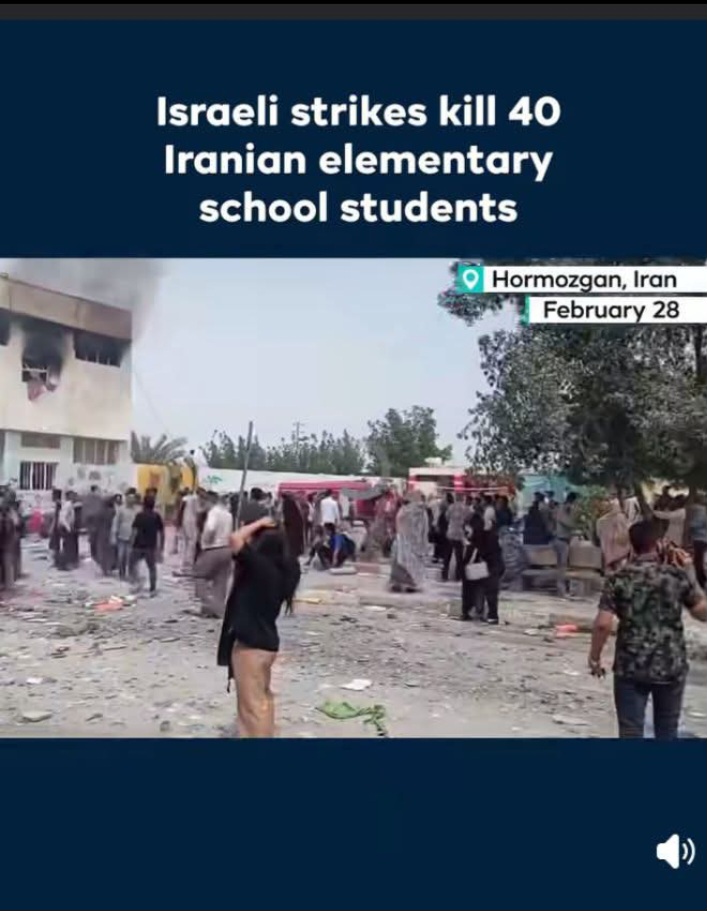
BREAKING NEWS: Viral Claims of Deadly Strike on Iranian School Spark Global Outrage, Confusion, and Urgent Calls for Verification
A wave of shock and anger swept across social media on Friday after a viral post claimed that Israeli airstrikes had killed 40 elementary school students in Hormozgan province, southern Iran. The emotionally charged claim, paired with disturbing images showing chaos, debris, and crowds of distressed civilians, spread rapidly across platforms including Facebook, X (formerly Twitter), Instagram, and WhatsApp, igniting fierce global reactions within hours.
The post, which prominently carried the caption “Israeli strikes kill 40 Iranian elementary school students,” quickly gained traction, amassing thousands of shares and comments. Many users expressed horror, grief, and rage, while others demanded immediate international intervention. Some political commentators and activists cited the post as evidence of escalating regional aggression, while protests and heated debates erupted online across multiple countries.
However, as the images and claims raced ahead of the facts, serious questions emerged about their authenticity and context. As of the time of this report, no independent international news organization has confirmed that an Israeli strike targeted an elementary school in Hormozgan or resulted in the deaths claimed in the viral posts. Major global media outlets have not corroborated the casualty figures, and the exact date, location, and circumstances surrounding the footage remain unclear.
Officials in Israel have not issued any public statement confirming involvement in an incident matching the viral description. Likewise, Iranian authorities have not released a detailed, verifiable report officially confirming the alleged attack or the number of victims shown in the circulating content. This lack of confirmation has raised concerns among analysts about the speed at which emotionally powerful but unverified information can dominate public discourse.
The footage itself appears to show a damaged building, emergency vehicles, and civilians gathering in distress, but experts note that images from conflict zones are often recycled, miscaptioned, or stripped of crucial context. In regions affected by long-running tensions, scenes of destruction can originate from unrelated incidents such as industrial accidents, older attacks, or even natural disasters, later repackaged to fit breaking narratives.
Security and media analysts warn that moments of heightened geopolitical tension are especially vulnerable to misinformation. The ongoing strain between Israel and Iran, marked by proxy conflicts, cyber operations, and regional power struggles, has created an environment where any dramatic claim can quickly feel believable, regardless of verification. In such situations, false or exaggerated reports can inflame public anger, pressure governments, and even influence real-world actions before facts are established.
Human rights advocates stress that if such an attack were verified, it would represent a grave violation of international law and demand immediate investigation. At the same time, they emphasize the importance of evidence-based reporting, urging the public to rely on trusted news agencies, official investigations, and on-the-ground verification rather than viral posts alone.
Social media companies have also come under scrutiny as the post continued to spread without clear warning labels or fact-checks in its early hours online. Critics argue that platforms must act faster when content involves allegations of mass civilian casualties, especially involving children, as such claims carry enormous emotional and political weight.
Meanwhile, ordinary users remain caught between empathy and uncertainty. Many expressed sorrow for the victims shown in the images, regardless of the circumstances, while others urged caution, reminding followers that misinformation has repeatedly circulated during past Middle East crises. “If this is true, it’s horrifying,” one user wrote. “But we need facts, not just captions.”
As investigations continue and official statements are awaited, journalists and analysts are urging restraint. The story highlights a broader issue in the digital age: how rapidly breaking claims—true or not—can shape global opinion before journalists, investigators, and authorities have time to confirm the facts.
For now, the incident remains unverified, but its impact is already real—fueling fear, anger, and renewed debate over war, media responsibility, and the power of viral content. The world is watching closely for credible updates, knowing that in conflicts as volatile as those involving Israel and Iran, truth is not only essential, but urgent.

BREAKING NEWS: Viral reports claim an Israeli airstrike killed 40 Iranian elementary school students in Hormozgan, sparking global outrage, grief, and heated social media debates—though officials have yet to confirm the tragic incident, leaving facts still unverified.

BREAKING NEWS: Iran hits back across the Gulf, targeting Arab states hosting U.S. bases, rattling cities, shutting airspace, sparking interceptions, global alarm, memes, and midnight sirens as a regional crisis explodes faster than diplomacy can blink on a tense Friday

BREAKING NEWS: Smoke Over Al Wakrah as Iran Missiles Are Intercepted Near United States military Bases—Gulf Tensions Explode Into the Open

Am i beauty, they said am not :Serena Williams questions her own beauty

BREAKING NEWS: Travis Kelce Poised to Become the Next Voice of Thursday Night Football as Prime Video Eyes Star NFL Tight End for Big Broadcast Switch

BREAKING NEWS: Serena Williams Shocks the World With an Unseen On-Court Moment That Instantly Goes Viral, Leaving Fans and Celebrities Speechless

BREAKING NEWS: Serena Williams Leaves Fans Worldwide in Shock After a Jaw-Dropping On-Court Moment That No One Expected, Turning a High-Stakes Match Into a Viral Scene That Sparked Instant Reactions, Debates, and Global Conversation Across Sports and Social Media Platforms

BREAKING NEWS — **Donald Trump calls for regime change in Iran as the United States and Israel unleash massive, coordinated strikes, triggering global alarm, Middle East airspace shutdowns, and fears of a wider regional war with worldwide economic consequences.

BREAKING NEWS: Internet Erupts Over Stunning Beach Photo — Fans Left Gasping as Raw, Unfiltered Confidence Challenges Every Idea of Beauty, Strength, and Power, Sending Social Media Into a Frenzy Worldwide.

BREAKING NEWS: Jaw-Dropping Beach Photo Stuns the Internet — Raw, Unfiltered Confidence Takes Over Social Media, Leaving Fans Shocked as Beauty Standards Are Boldly Challenged With Zero Apologies.

BREAKING NEWS: Taylor Swift and Travis Kelce Set the Internet on Fire as Wedding Bells Rumored for June 13, 2026, Fueling Global Frenzy, Fan Theories, and Buzz Over a Fairytale Celebrity Celebration
